|
If you have ever
visited a good wildlife garden, two things probably
caught your attention. Firstly, it was probably
whirring and fluttering with life! There were
bumblebees, hoverflies and butterflies, moving from
flower to flower, gathering nectar or pollen.
Secondly, you might have noticed plenty of native
wildflowers – under the hedge, tucked into borders
alongside cottage garden plants, or knee deep around the
pond edge. Native plants and invertebrates have a
special, long standing relationship and wherever you
find one, the other is somewhere close by. Once
this connection has been established in your garden
everything else, from chiff chaffs to hedgehogs, will
follow.
There are plenty of ways
of including wildflowers in your garden, and if you can build a habitat
around them you will be providing more than just nectar and pollen for
visiting insects. Red campion and greater stitchwort at the bottom of
a hedge will soon start to provide shelter for small mammals amongst the
leaves and stems. Here bank voles and wood mice will hunt for seeds,
common shrews may find a slug or two and wrens will search for spiders.
An undisturbed shady hedge bottom will soon attract all manner of wildlife
if it includes native flowers. But perhaps the best way to grow a mass
of wildflowers whilst creating a fabulous wildlife habitat is
to make a small wildflower meadow. This is not as
difficult as many people imagine, but it does require hard
work and commitment!
The easiest way to do this
is to start with weed free, bare soil. Choose an area
where the soil fertility is as low as possible, otherwise the
meadow grasses will grow more vigorously than the wildflowers
and soon your flowers will be swamped. If your garden
soil has been cosseted and composted, you may need to remove
the top six inches and replace it with subsoil from another
area. Obtain local seed if you can. The species within
it will be used to your conditions, and your local
invertebrates will be better adapted to these plants.
Sow the seed at a rate of about 4 grams per square meter onto
raked soil, and walk over it, gently pushing the seed into the
soil. Don’t cover the seed – some species need light to
germinate. Shoo the birds away, water gently if the
weather is dry, and wait. Actually, not much will happen
for some time – a meadow is a slowly evolving habitat, in need
of maintenance and attention. But as the flowers and
grasses establish, you will begin to see a tapestry of species
emerging.
A meadow must be cut once every
year in late summer or early autumn. Cut with a scythe and leave your hay for a few days to dry. Rake it off with as
must vigour as you can, allowing the seeds to drop and make contact with the
soil beneath. Here they will germinate and replenish those that are
inevitably lost each year. If all this sounds like hard work (and it
is!) you may like to opt for a cornfield mixture – annual wildflowers
including poppies, cornflowers and corn marigold. These only require
pulling out after flowering to ensure that fallen seed will germinate to
produce the colourful display again next
year. If a
wildflower meadow is not for you there are plenty of other
ways of incorporating native plants. Our native wild
flowers have always been grown in gardens, and most of us grow
a few without even thinking about it. The majority of
gardeners have a primrose tucked into a shady corner
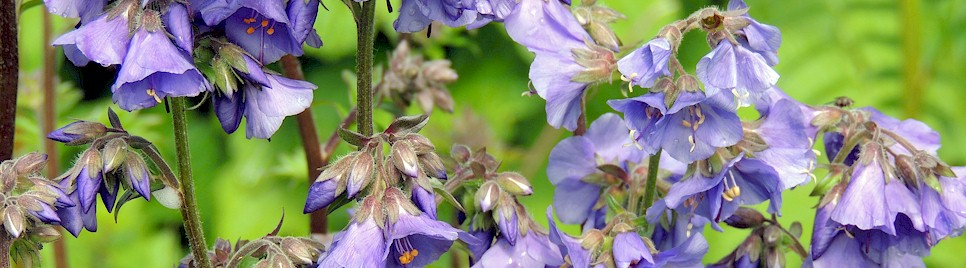
somewhere, or grow a Jacob’s ladder, wood cranesbill or
foxglove, without relegating these wildlings to the end of the
garden. Back in Victorian times, many gardeners were
passionate about ‘wild gardening’ and in larger gardens an
area was often cultivated as a romantic wilderness, full of
wild flowers and dreamy vistas. Sometimes at great expense,
rocky outcrops were installed, and old wooden gates leading
into fields beyond were a special feature of these wild
areas. Wildlife gardening as such was not a feature of those
times but most gardeners now appreciate that growing native
plants is a crucial part of what wildlife gardening is all
about. Wild flowers are the backbone of any wildlife garden –
these are the plants that ultimately all our native wildlife
depends upon.
Those
of us that grow native plants in our gardens now do so for
entirely different reasons to those Victorian gardeners of
long ago. Our main objective is create habitats to provide
food for butterflies, bees or birds, and to bring wildlife to
our back doors. Encouraging wildlife is something any organic
gardener knows will be valuable for many different reasons.
Beneficial insects such as hoverflies and ladybirds can be
encouraged by an informed choice of the right native plants.
Solitary bees and bumblebees, so important for the pollination
of vegetable crops and fruit trees, can be enticed to just the
right spot by growing the plants they naturally feed on in the
wild. However, the choice of wildflowers in Garden Centres is
still not as wide as it could be and many gardeners are put
off growing their own native species from seed. Many wild
flower seeds require periods of frost, or perhaps
scarification, before they will germinate, facts that often
deter gardeners from trying them a second time. The cowslip
is the most common culprit in this respect. How many of us
have tried to germinate the seeds of this lovely wild flower
only to give up when nothing appeared in the seed tray? The
answer of course is to sow in the winter and leave the pot
outside where the cold and frost will work their magic, and
trigger germination as early as February.
Fortunately for us, many of the most useful wild flowers are
not only amongst the most beautiful, but are also some of the
most adaptable to grow. There are quite a few that perhaps
should be left in the countryside, because even in the largest
garden coltsfoot or butterbur can take over too quickly, but
at this time of year there are many wonderful easy-to-grow
natives in flower in the countryside. Take a look at some of
these now and make plans to add a few to your garden in the
autumn.
Good
plants for those new to wild flower gardening would be the
four common species of campion – the red, white, sea and
bladder campions. These are familiar plants to most of us and
are especially easy to start from seed as they require no
special treatment. Seeds sown in September or March in small
pots of peat free compost will spring into life quickly and
easily, and grow rapidly into sturdy plants that will flower
in their first year.
Any garden full of insects
and other invertebrates soon becomes home to all the other
animals that depend upon them. For every creature you
see there are probably a hundred that you don’t see, hiding
beneath the foliage of low plants, deep amongst the leaves of
shrubs, under stones or logs, in fact in every small space
where there is shelter. Plant wildflowers in your
garden and watch the wildlife arrive. |